

The Biggest Full Moon Since 2019 Lands on Christmas Eve. Are You Ready?
The Christmas Eve Super Full Moon 2026: How to Watch It (and Get a Closer Look)
Some years, the sky decides to put on a show right when everyone’s already gathered together. This is one of those years.
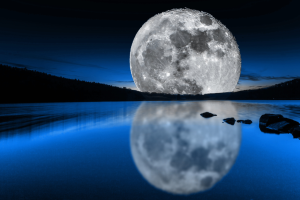
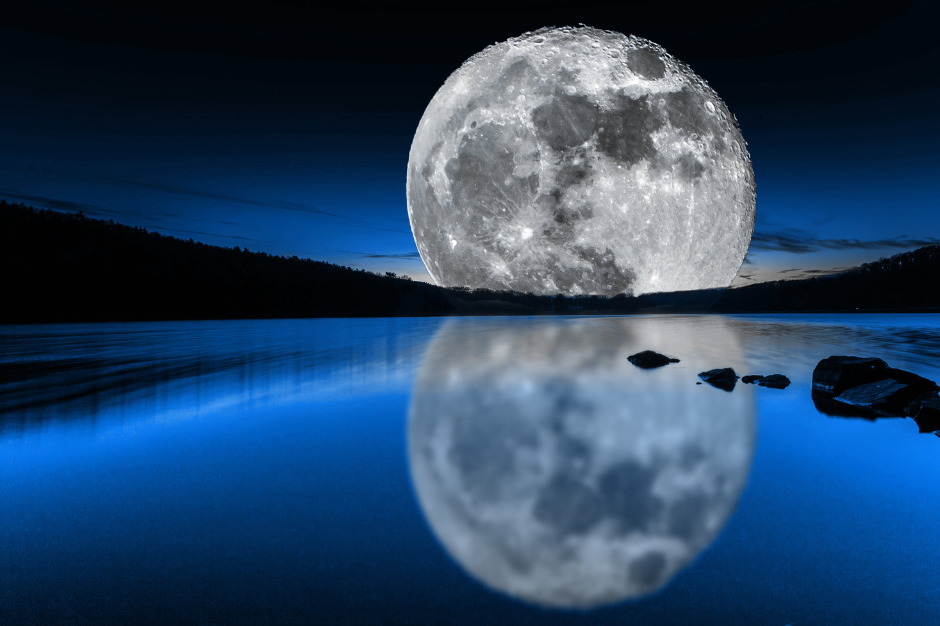
On 24 December 2026, a Christmas Eve super full moon will light up the Aussie night sky, and it’s a big one. The December full moon, traditionally called the Cold Moon, lines up with the Moon’s closest approach to Earth, making it the largest and brightest full moon we’ve seen since 2019. A full moon landing on Christmas Eve is a rare coincidence too, so it’s worth making a little plan around it.
The Moon's bright appearance makes it an excellent target for amateur astronomers and beginners alike. Unlike many distant astronomical objects, the Moon is relatively easy to find and observe, even if you're new to astronomy.
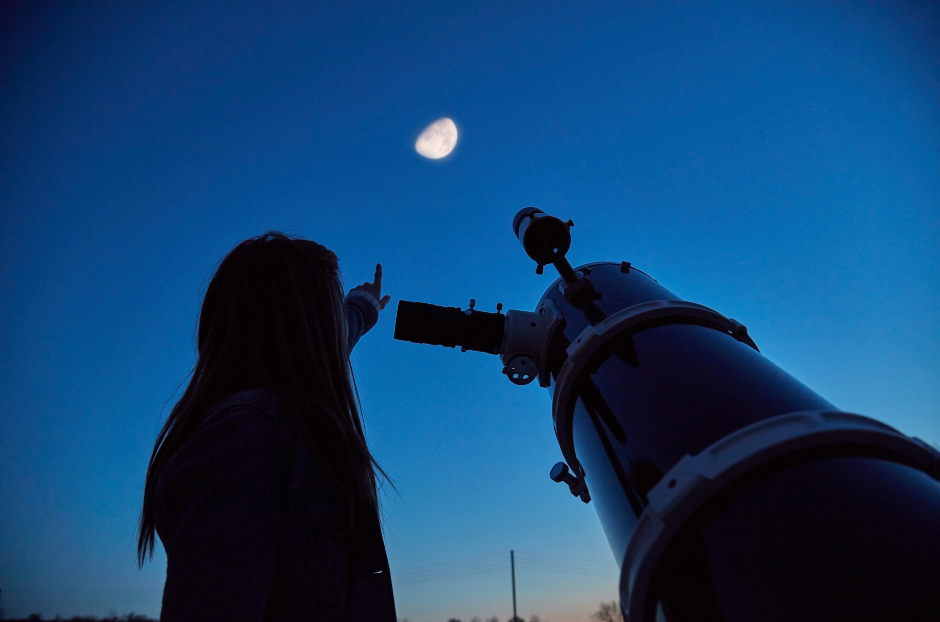
While the Moon is impressive to look at with the naked eye, viewing it through a telescope can reveal an entirely different world of detail. It's also a fantastic opportunity to introduce children to stargazing, from identifying the familiar lunar craters to learning about the different phases of the Moon, there's plenty to discover.
If you've been thinking about investing in a telescope, or upgrading your current equipment, a Christmas Eve full Moon could be the perfect inspiration to get started.
What Makes it a Super Moon?
You may have heard the term Supermoon, but what does it actually mean?
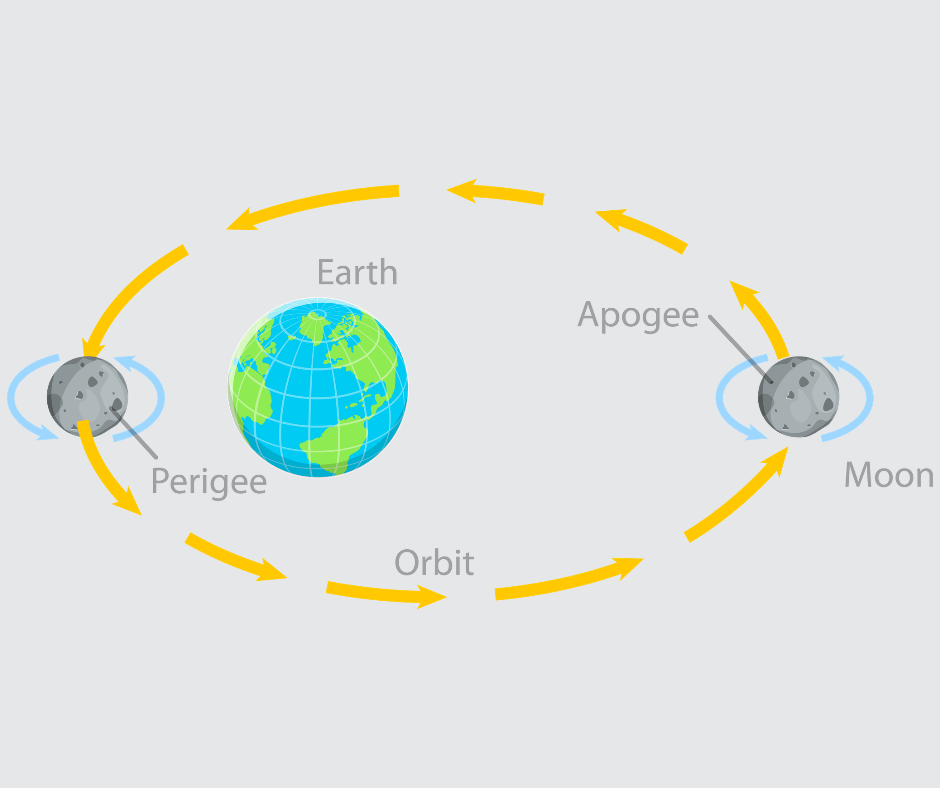
The Moon doesn’t orbit Earth in a perfect circle. Its path is a slightly squashed oval (also known as an ellipse), so the distance changes through the month. The point in its orbit when it is closest to Earth is called perigee, while its furthest point is known as apogee.
When a full moon coincides with the near end of that orbit (called perigee), we call it a supermoon.
What Makes the December 24, 2026 Super Moon So Special?
For Christmas Eve 2026, the timing couldn't be more picturesque as the Moon will be sitting roughly 357,000 km away from Earth, meaning it is closer to us than a standard full moon. Although the difference is subtle to the naked eye, it will appear roughly 14% larger and up to 30% brighter than a micro-moon, and if there's snow on the ground, the landscape will practically glow as if lit by daylight.
While deep-sky astrophotographers often grumble about bright moonlight washing out faint galaxies, for lunar observation, it’s prime time. The sheer brightness highlights vast dark volcanic plains (maria) and sharp ray systems like the Tycho crater with striking clarity.
When to Look
Depending on where you live, the exact moment of full moon falls on the 23rd or the 24th, so don’t stress about the precise minute. The Moon looks essentially full for about three nights between December 22 to 24, Christmas Eve itself is a great night to watch.
A few tips to make the most of it:
- Catch the moonrise: Head outside about 20 to 30 minutes after sunset and look towards the eastern horizon. A rising moon looks enormous thanks to the famous “Moon illusion”, where our brains inflate its size next to trees, rooftops and hills.
- Find an open view: A park, beach, hilltop or even a clear backyard fence line works better than a spot hemmed in by buildings.
- Check local moonrise times: They shift with your location, so look up your own city before heading out.
Why View the Moon Through a Telescope?
Looking at a full Moon with the naked eye is an enjoyable experience, but a telescope brings out details that are otherwise difficult to appreciate.
Rather than seeing a bright disc in the sky, you'll be able to explore a landscape covered in craters, mountain ranges, valleys and vast lunar plains.
Some of the most interesting features to look for include:
- Lunar craters: Circular impact features formed by collisions with asteroids and other space debris. Larger craters can be particularly impressive through a telescope.
- Maria (lunar seas): The dark patches visible across the Moon's surface are enormous ancient volcanic plains, formed by solidified lava.
- Mountain ranges: The Moon has impressive mountain formations, many of which can be observed with modest amateur telescopes.
- Crater shadows: Changes in sunlight across the lunar surface create shadows that help reveal the depth and structure of craters.
One interesting thing to know is that the full Moon isn't necessarily the best time to see every lunar feature.
When the Moon is full, sunlight illuminates almost its entire visible face. While this creates a spectacular bright disc, the lack of shadows can make some surface features appear flatter.
During the first and last quarter phases, the boundary between lunar day and night (known as the terminator) creates longer shadows. These shadows can make craters and mountains stand out with impressive contrast.
So, while Christmas Eve might be the perfect occasion to enjoy the full Moon, there are plenty of reasons to keep your telescope handy throughout the lunar cycle.
Telescope Buying Guide: What To Look For
Choosing your first telescope can feel overwhelming, but a few simple factors cover most of it.
1. Aperture
Aperture is the diameter of the telescope’s main lens or mirror, and it decides how much light the telescope collects and how sharp the view is. For lunar viewing, a 70mm to 130mm aperture is a great starting range. Bigger gathers more light, but also costs more and weighs more.
2. Telescope Types
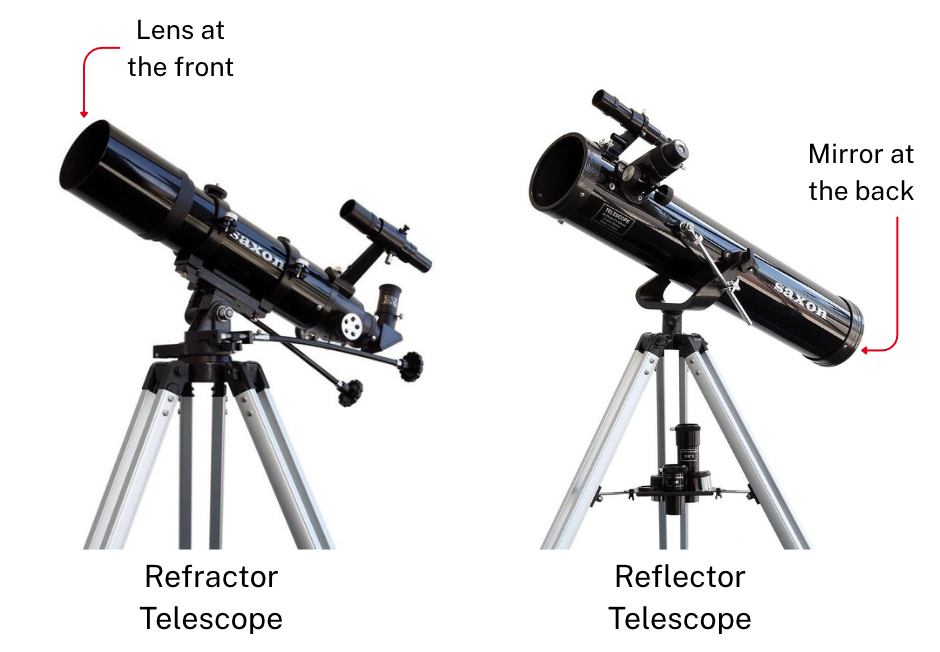
- Refractor telescopes use lenses, are low-maintenance and easy to operate, and give crisp, high-contrast views. They’re excellent for Moon and planet viewing and a popular choice for beginners and families.
- Reflector telescopes (including Newtonians) use mirrors, giving you more aperture for your money. Great value if you want to grow into deep-sky targets later.
- Dobsonian telescopes are a simple, sturdy style of reflector on an easy-to-use mount. They’re widely regarded as the best bang for your buck, though they’re bulkier.
- Compact catadioptric telescopes (Maksutov and Schmidt-Cassegrain designs) fold a long focal length into a small tube. They’re portable and strong for lunar and planetary detail, usually at a higher price. These are also telescopes commonly used for deep-sky astrophotography.
3. Focal Length
Focal length influences the magnification available with a particular eyepiece. Telescopes with longer focal lengths can make it easier to achieve higher magnifications using commonly available eyepieces.
4. Magnification
Magnification is calculated by dividing the telescope's focal length by the eyepiece's size.
For example, a telescope with a 1000mm focal length paired with a 10mm eyepiece provides 100x magnification.
A 1000mm focal length paired with a 25mm eyepiece will be 40x magnification.
It's important not to get caught up in claims of extremely high magnification. Image quality, aperture and atmospheric conditions all influence how much useful magnification you can achieve.
5. Mount Type
A stable mount is just as important as the telescope itself. A wobbly tripod turns every nudge into an earthquake. Look for a solid mount that’s easy to point:
- Alt-azimuth mounts move up-down and left-right, which is intuitive and beginner-friendly.
- Equatorial mounts track the sky’s rotation in a curved horizontal path and suit astrophotography, but have a steeper learning curve.
- Computerised “GoTo” mounts find targets automatically, which is handy if you want to explore beyond the Moon.
For straightforward lunar observing, a stable and easy-to-operate mount is a great starting point.
6. Telescope Accessories
A telescope is the main ingredient, but a few accessories can make your observing sessions even more enjoyable.
- Moon filter: A neutral-density filter cuts glare from the bright lunar surface and makes extended viewing more comfortable.
- Extra eyepieces: Different focal lengths give you different magnifications and viewing fields.
- Barlow lens: Increases the effective magnification of compatible eyepieces, offering additional viewing flexibility.
- Smartphone adapter: Lets you capture the Moon from your mobile phone and share it. A Christmas Eve photo makes a great keepsake.
- Red LED torch: Protects your night vision when you’re adjusting gear, finding accessories, and reading star charts outside in the dark.
Remember, you don't need to purchase everything at once. Starting with a good telescope and gradually building your accessory collection is often the most rewarding approach.
Not Ready For A Telescope? Try Binoculars
A good pair of astronomy binoculars is a fantastic alternative starting point for star and moon gazing. They’re portable, quick to set up on tripods and surprisingly capable on the Moon. Many stargazers keep a pair even after buying a telescope.
Our Picks For Every Budget
|
Stargazer |
What to look for |
Browse |
|
Curious beginner |
Compact refractor or entry-level tabletop reflector |
|
|
Family or gift-giver |
Beginner refractor with alt-azimuth mount and starter eyepieces |
|
|
Keen hobbyist |
Dobsonian or larger reflector for sharper detail |
|
|
Aspiring astrophotographer |
Equatorial or GoTo mount with smartphone/camera adapter |
Not sure where to start? The team at BinoCentral is happy to talk it through. Pop into our showroom at 1/43 Winton Road, Joondalup, WA 6027 or reach out to us by phone at (08) 6108 4239 or email at support@binocentral.com.au and we’ll help match a telescope to your budget, space and stargazing goals.
Tips for Getting the Best View of the Christmas Eve Super Full Moon
Once you've chosen your telescope, a little preparation can make a big difference to your observing experience.
1. Find a Clear Viewing Location
Choose somewhere with an unobstructed view of the sky. While the Moon is bright enough to observe from many suburban locations, getting away from direct artificial lighting can make the overall experience more enjoyable.
2. Allow Your Telescope to Adjust to the Temperature
If you've brought your telescope outside from an air-conditioned or heated room, give it some time to adjust to the outdoor temperature. This can help improve image stability.
3. Start with a Low Magnification
Begin with a lower-power eyepiece (such as 40mm or 25mm) to locate the Moon and centre it in your field of view. Once you've achieved a sharp image, gradually increase magnification if atmospheric conditions allow.
4. Take Your Time Focusing
Small adjustments to the focuser can make a significant difference. Give yourself time to achieve the sharpest possible image before moving on to higher magnifications.
5. Keep Observing Beyond the Full Moon
Don't put your telescope away after Christmas Eve. The changing lunar phases provide different lighting conditions, revealing new details along the terminator as the shadows shift.
And one important reminder: never point a telescope at the Sun unless it is fitted with a properly designed, securely installed solar filter intended for that telescope.
Make This Christmas One to Remember
The December 2026 full Moon offers a wonderful excuse to slow down, step outside and enjoy something a little different this Christmas Eve. Whether you're simply admiring the Moon with your family or exploring its surface through a telescope, lunar observing is an accessible and rewarding way to connect with the night sky.
If you've been thinking about buying your first telescope, there's no better time to start exploring your options. From easy-to-use refractor telescopes to powerful reflectors and versatile compound designs, there's an instrument to suit almost every level of experience and budget.
Explore our range of telescopes and astronomy accessories to find the right equipment for your next lunar adventure.
This Christmas, give yourself something truly out of this world: a closer look at the Moon.