

Australia's Super New Moon Explained: Dates, Effects & Visibility
May 2026 Super New Moon Australia Guide
Between the nights of May 15 – 17 May 2026, we’ll be experiencing a Super New Moon, a subtle but astronomically significant lunar event. Although it won’t be visible in the sky (new moons never are), it plays an important role in understanding lunar cycles, tides, and even the way we observe the Moon from Earth.
This guide explains:
- What a New Moon actually is
- What makes a Super New Moon different
- The real-world effects you might notice
- Common myths vs scientific reality
Let’s break it down.
What Exactly Is a New Moon?
A New Moon occurs when the Moon sits directly between the Earth and the Sun. During this alignment:
- The side of the Moon facing Earth is not illuminated.
- The Moon rises and sets roughly with the Sun, meaning it’s only ‘out’ during the day.
- It appears invisible or hidden in the night sky.
This phase marks the beginning of the lunar cycle, which lasts about 29.5 days (called a synodic month). In many cultures, the New Moon represents a time for a “clean slate” by setting new beginnings and intentions.
The cycle moves through:
- New Moon
- First Quarter
- Full Moon
- Last Quarter
And then returns to New Moon again.
What Makes It a “Super” New Moon?
The term “Supermoon” was popularised to describe a full moon occurring near its closest approach to Earth, but it can also apply to a New Moon.
The Science Behind It
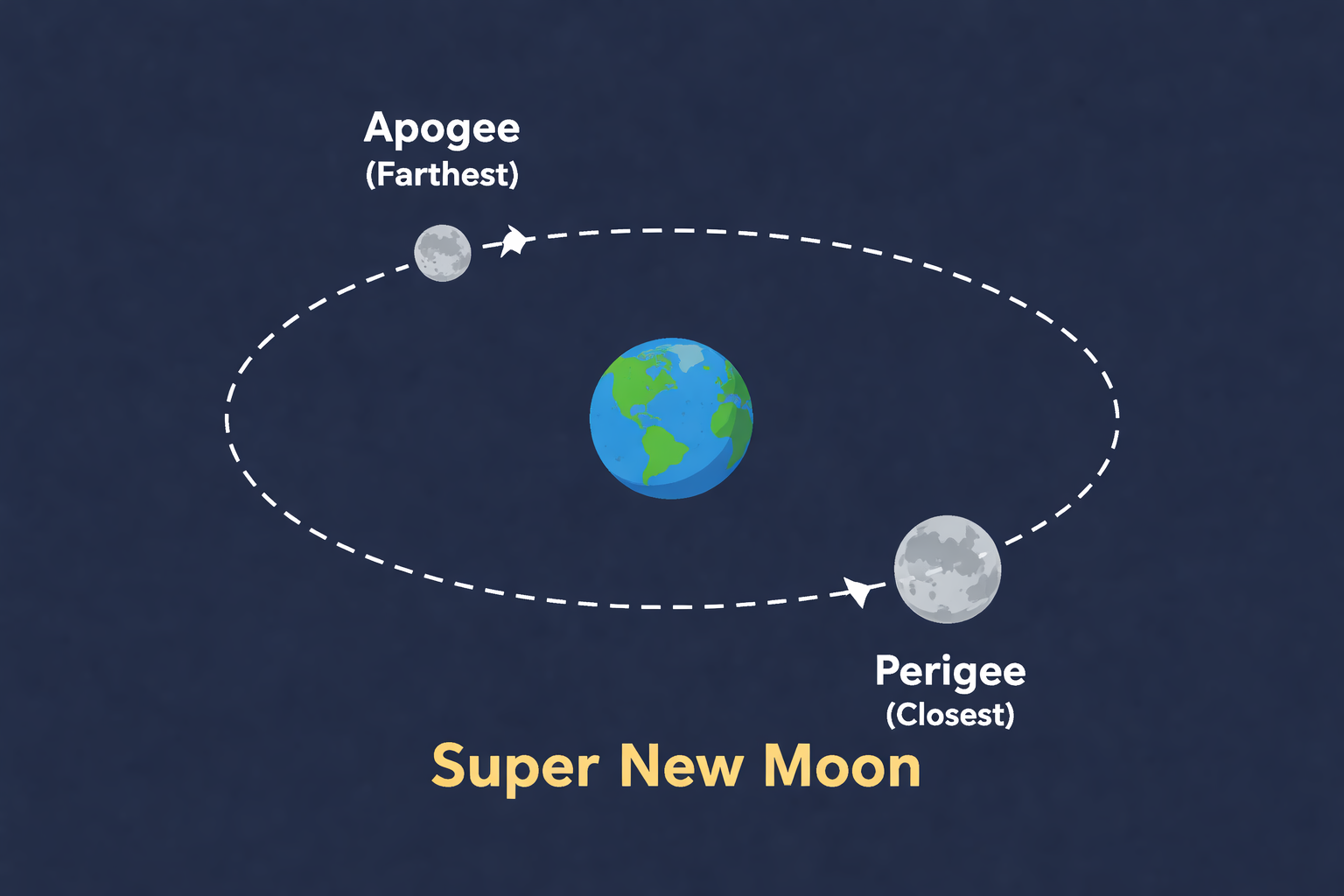
The Moon’s orbit around Earth is elliptical (oval shaped) and not perfectly circular, that means:
- Perigee = The Moon is closest to Earth
- Apogee = The Moon is farthest from Earth
When a New Moon happens near perigee, it’s called a Super New Moon.
During May 15 – May 17 2026, the New Moon will occur very close to perigee — making it a Super New Moon.
The May 2026 Breakdown
On May 16, 2026, the Moon will reach its "New" phase while it is exceptionally close to Earth roughly 358,594 kilometers away. For comparison, the average distance is usually about 384,400 kilometers, an approximate 30,000 kilometer difference in distance between a regular and Super New Moon.
| Regular New Moon | Super New Moon | |
| Distance | Average (~384,400km) | Close (~358,594km) |
| Visibility | Invisible | Invisble (but physicaller larger) |
| Gravitational Pull | Standard | Stronger |
You won’t see a bigger Moon because it’s not illuminated. The effects are primarily related to tides.
The Effects: What Happens on Earth?
Even though the Moon is hiding in the Sun's glare, its physical proximity has real-world consequences.
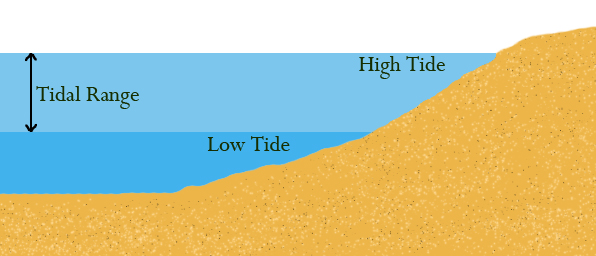
The biggest measurable impact of a Super New Moon is on Earth’s oceans.
When the Sun, Moon, and Earth align during a New Moon, their combined gravitational forces act as a celestial ‘tug-of-war’ which result in spring tides (higher high tides and lower low tides).
When the New Moon is also near perigee:
- High tides may be slightly higher than usual
- Low tides may be slightly lower
- Coastal areas can see more noticeable tidal ranges
This doesn’t automatically mean flooding, but it can contribute to higher water levels if combined with storms or weather systems.
For coastal communities, astronomers and meteorologists pay attention to these dates.
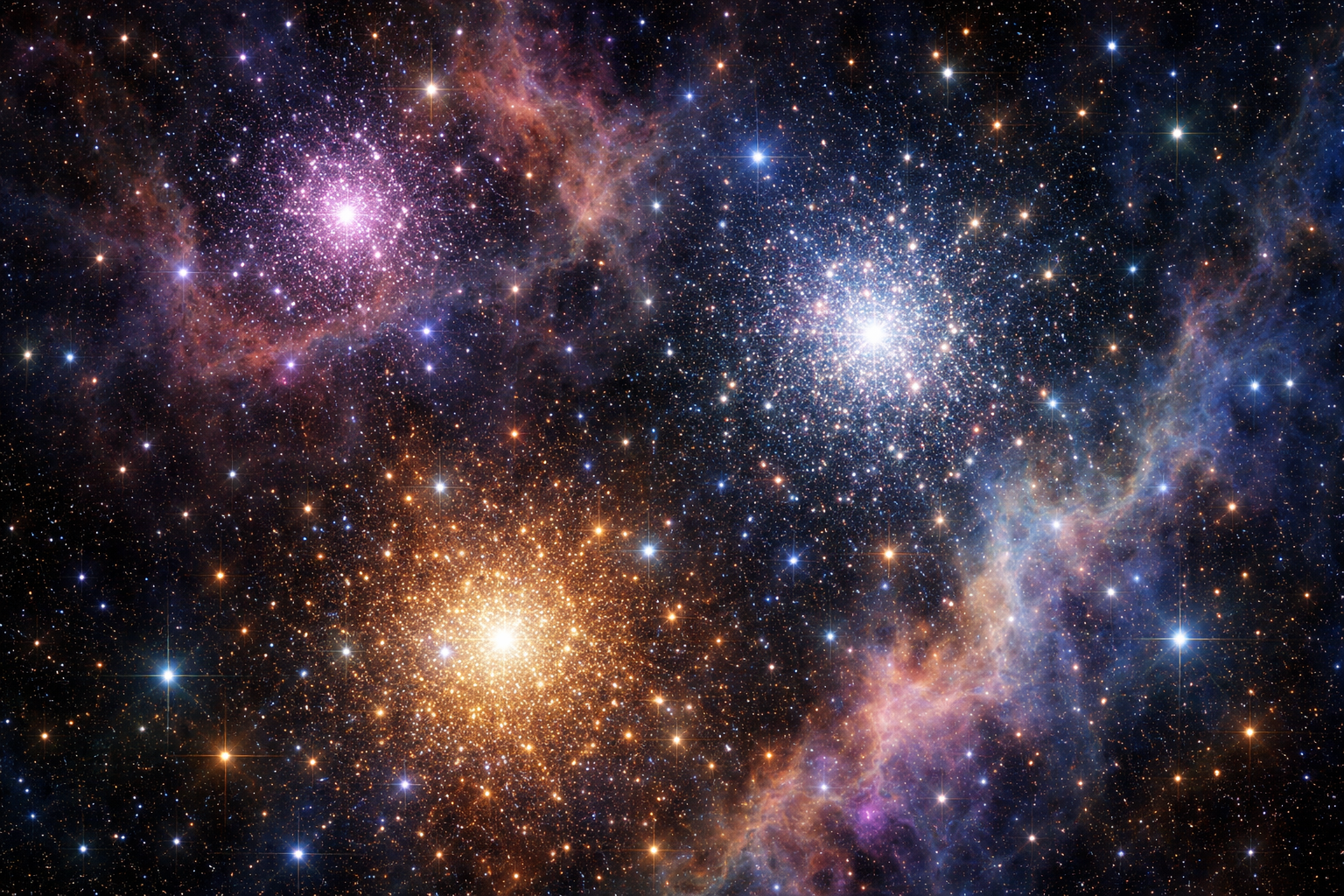
Because the Moon is completely dark and absent from the night sky, a Super New Moon provides the darkest possible conditions for astronomy. With no lunar light pollution, May 15th - 17th will be the best night of the month to view:
- The Milky Way's galactic core.
- Faint star clusters and distant nebulae.
- The peak of late-spring meteor activity.
This will be the ideal time for aspiring and seasoned astrophotographers to get excellent views and images of deep-sky objects.

Throughout history, lunar events have carried symbolic meaning. Many people associate:
- New Moons with new beginnings
- Super Moons with intensified energy
However, these are cultural or spiritual interpretations rather than scientific effects.
From an astronomical perspective, the main difference is gravitational — not emotional or behavioural.
Why You Won’t “See” the Super New Moon
Unlike a Super Full Moon (which looks visibly larger), a Super New Moon:
- Cannot be seen with the naked eye
- Is lost in the Sun’s glare
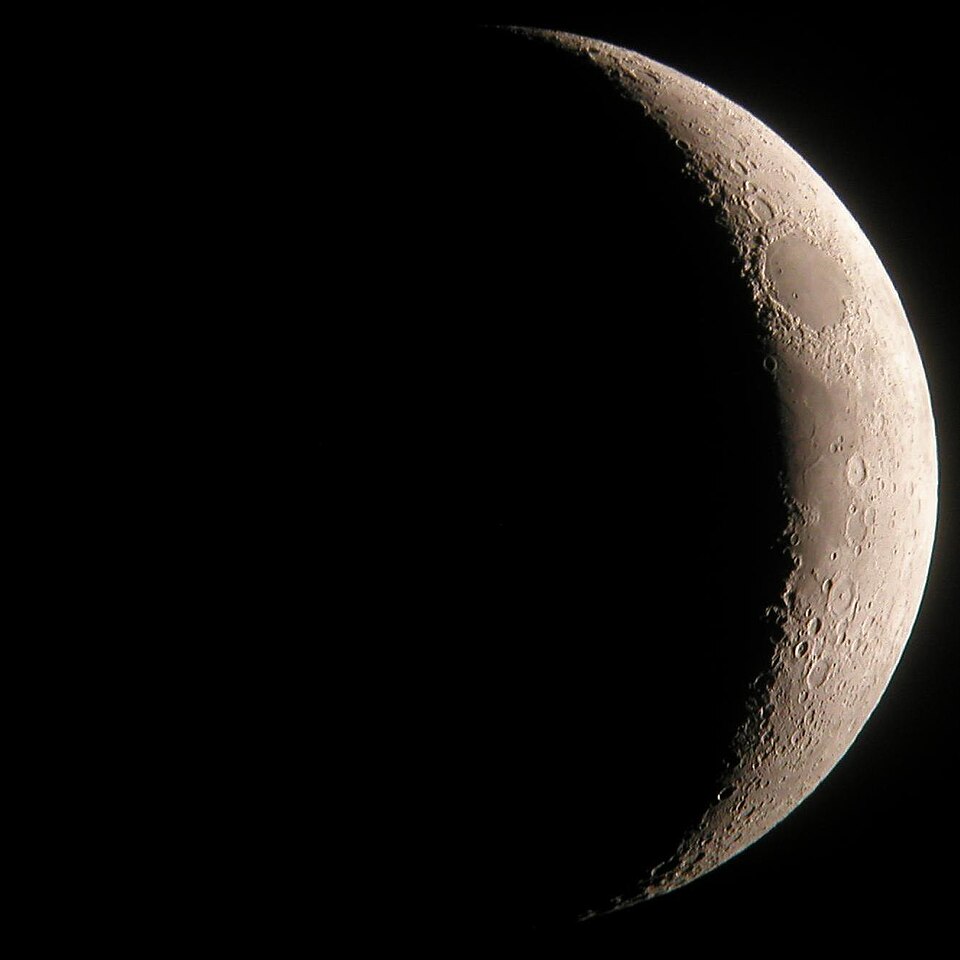
- Only becomes visible a day or two later as a thin waxing crescent
So while the event is real and measurable, it’s not visually dramatic. However, you can experience its altering effect in various ways.
- Go Stargazing: Use a stargazing app to find a dark-sky spot near you on the night of May 16th.
- Visit the Coast: If you live near the ocean, watch the dramatic difference between high and low tide.
- Set an Intention: Use the 'dark' phase to clear your mental deck for the coming month.
Frequently Asked Questions
Is a Super New Moon rare?
Not extremely. Super New Moons occur a few times per year, depending on how closely perigee aligns with the New Moon phase.
Is it dangerous?
On its own, no. The only noticeable impact is slightly enhanced tidal movement.
Can it cause earthquakes?
There’s no reliable scientific evidence that Super New Moons trigger earthquakes.
Is it good for stargazing?
Yes, New Moons provide the darkest skies of the month.
Will it look bigger?
No. Unlike a Super Full Moon, a Super New Moon isn’t visible.
Final Thoughts
The Super New Moon between 15–17 May 2026 is a fascinating reminder of how dynamic the system between the Earth and the Moon truly is.
Even when the Moon seems absent from the sky, it continues to influence:
- Ocean tides
- Planetary motion
- Our understanding of celestial mechanics
Although it won’t be a dramatic sky event, this will be an excellent opportunity to appreciate the quiet precision of orbital physics and maybe even take advantage of darker skies for a night of stargazing.
If you live near the coast, keep an eye on tidal forecasts around those dates. If you love astronomy, mark your calendar for some prime dark-sky observing.
The Moon may be invisible, but its influence never is.