


57th Anniversary of Apollo 11: Remembering the First Moon Landing
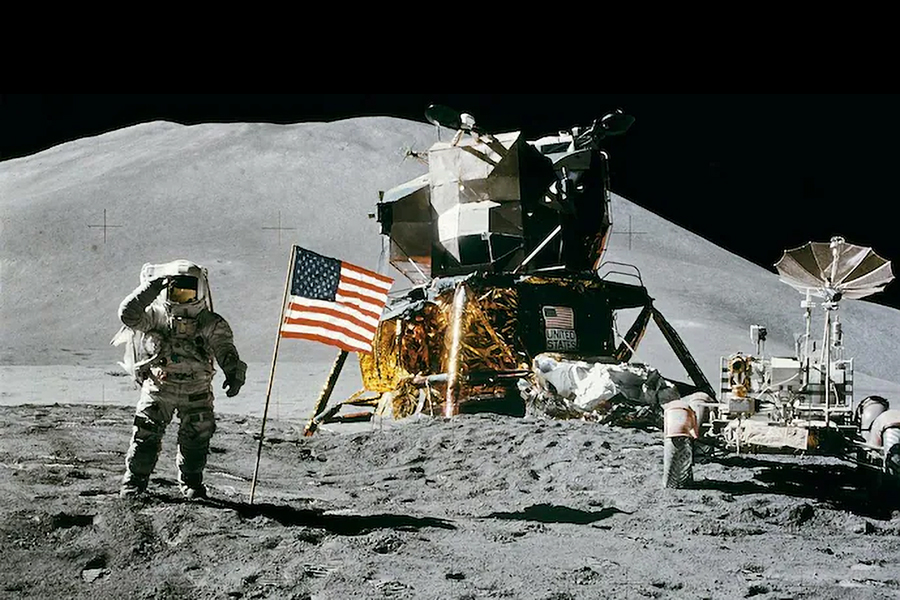
Apollo 11 Moon Landing Mission, image credit: San Juan College
One Giant Leap, 57 Years Later: Why Apollo 11 Still Matters
Imagine watching a grainy black-and-white screen, holding your breath, as two human beings took their first steps on another world.
On a quiet July evening in 1969, an estimated 600 million people — one-fifth of the entire global population at the time – gathered around televisions, radios, and newspaper bulletins to witness something that had never happened before in human history. For the first time, human beings were about to set foot on the Moon. What followed would become one of the greatest space exploration milestones of all time: the Apollo 11 moon landing.
As we celebrate the 57th anniversary of Apollo 11, we don’t just remember a historic moment. We revisit a story of courage, innovation, science, and the unstoppable human desire to explore the unknown.
What Was Apollo 11?
Apollo 11 was a NASA mission launched on July 16, 1969, as part of the larger Apollo program. Its goal was simple to say but incredibly difficult to achieve: land humans on the Moon and return them safely to Earth.
At the height of the Cold War space race, the United States and the Soviet Union were competing for dominance in space exploration. Reaching the Moon first would have made a very powerful political and technological statement, not just a scientific accomplishment.
Launched on July 16, 1969, from Kennedy Space Center in Florida, the mission carried three astronauts:
- Neil Armstrong, Commander
- Edwin “Buzz” Aldrin, Lunar Module Pilot
- Michael Collins, Command Module Pilot
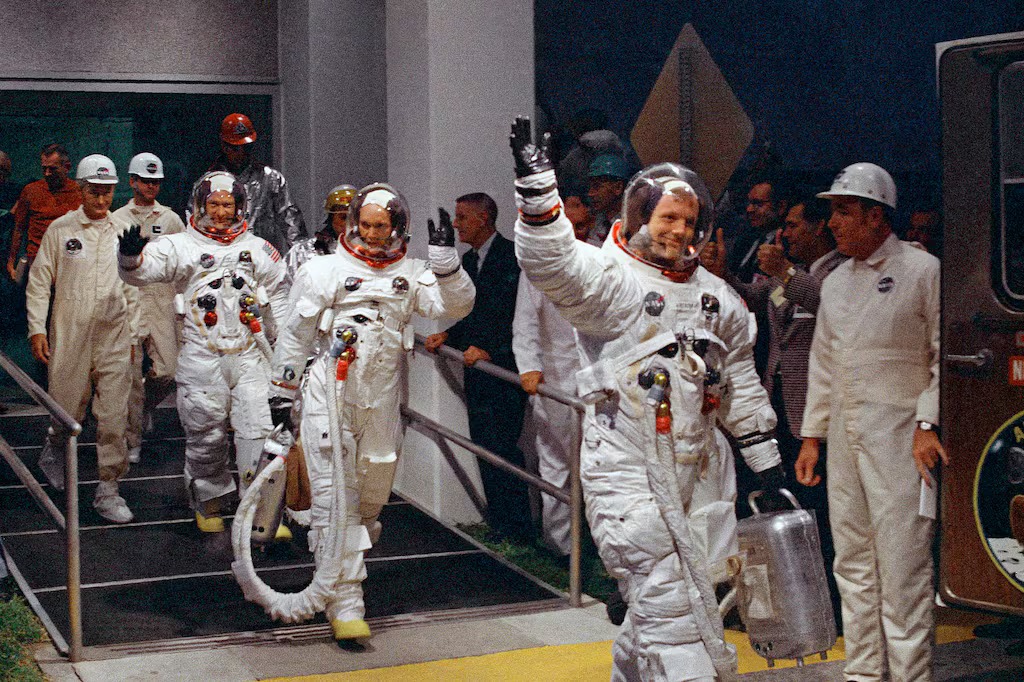
Left to right: Neil Armstrong, Michael Collins, and Buzz Aldrin on launch day, July 16, 1969. Source: SBS Australia
The Historic Moon Landing
Four days after launch and upon entering lunar orbit, Armstrong and Aldrin descended to the lunar surface in the Lunar Module, nicknamed Eagle, while Collins orbited above in the Command Module, Columbia. The landing was far from smooth. Computer alarms went off. Fuel was running low. Tension had filled mission control.
But at 20:17 UTC on July 20, 1969, the message the world was waiting for finally came through:
“Houston, Tranquility Base here. The Eagle has landed.”
Hours later, Neil Armstrong stepped onto the Moon, speaking the famous words that would echo through history: "That's one small step for [a] man, one giant leap for mankind."
Aldrin soon joined him shortly after, and the two spent about two and a half hours walking on the lunar surface, collecting rock samples, planting the American flag, and conducting scientific experiments. The entire crew safely returned to Earth on July 24, 1969 — mission accomplished.
The Road to the Moon: A Brief History
The Apollo 11 moon landing didn't happen overnight. It was the result of years of planning, sacrifice, and innovation during the space race, one of the most intense technological races in modern history between the United States and the Soviet Union.
On April 12 1961, Soviet cosmonaut Yuri Gagarin had become the first person to journey into outer space and the first to orbit the Earth. This pushed the U.S. to aim for a bigger and braver statement that will prove their technological power and intelligence ahead of the Soviets.
By May 25 1961, President John F. Kennedy challenged the nation with a bold vision: land a man on the Moon before the end of the decade. At the time, the U.S. had barely sent an astronaut into orbit. What followed was a massive national effort involving over 400,000 engineers, scientists, and technicians working under NASA to make the dream a reality.
Tragically, the road wasn't without loss. In 1967, the crew of Apollo 1 — Gus Grissom, Ed White, and Roger Chaffee — died in a launchpad fire during a routine test. Their sacrifice galvanised the program, driving engineers to redesign the spacecraft with greater safety in mind. Apollo 11's success was built on the shoulders of everyone who came before it.
The Technology Behind the Mission
When we talk about the Apollo 11 anniversary, it’s easy to focus on the astronauts. But the technology that made the moon landing possible was just as extraordinary.
The Saturn V rocket, still one of the most powerful rockets ever built, carried the spacecraft into space. It stood over 110 metres tall and generated enough thrust to lift over 2.7 million kilograms off the ground.
The spacecraft itself had three main parts:
- The Command Module (Columbia), which carried the crew to lunar orbit and back to Earth
- The Service Module, which provided power and propulsion
- The Lunar Module (Eagle), designed specifically for landing on the Moon
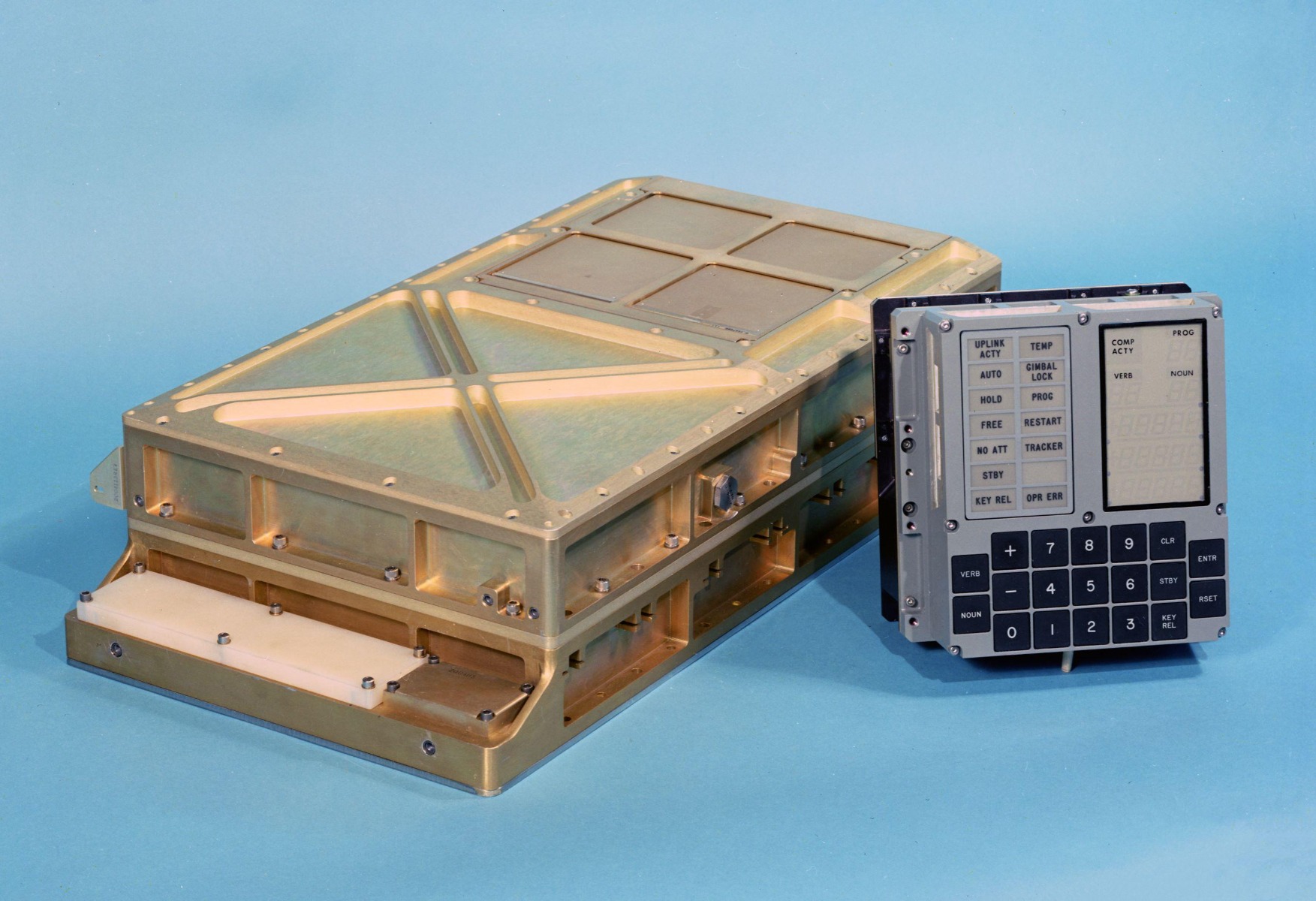
The Apollo Guidance Computer - This little gadget was responsible for guiding one giant rocketship towards the Moon.
What makes this even more remarkable is that the onboard computers had far less processing power than today’s smartphones. Yet through engineering brilliance and human determination, the mission succeeded.
Why Apollo 11 Still Matters in 2026
Fifty-seven years later, why does the Apollo 11 moon landing still capture our imagination?
1. It Changed Space Exploration Forever
Apollo 11 proved that human spaceflight could reach beyond Earth orbit. It opened the door for future lunar missions, space stations, and deep space exploration. Today’s missions to Mars and renewed lunar exploration programs all trace their roots back to Apollo 11.
2. It Advanced Science and Technology
The Apollo program led to major advances in computing, materials science, telecommunications, and engineering. Countless technologies we use today have roots in the research and engineering that made the lunar missions possible. These include memory foam, scratch-resistant lenses, water filtration systems, cordless power tools, and the early foundations of modern computing.
More broadly, Apollo 11 sparked a generation of scientists, engineers, and dreamers. It proved that space exploration is not purely science fiction but an achievable human endeavour.
3. It United the World
Despite political tensions of the Cold War, the Moon landing was watched by an estimated 600 million people worldwide. For a brief moment, humanity shared a common achievement. The image of astronauts on the Moon became a symbol of global possibility.
The Three Astronauts: Who Were They?
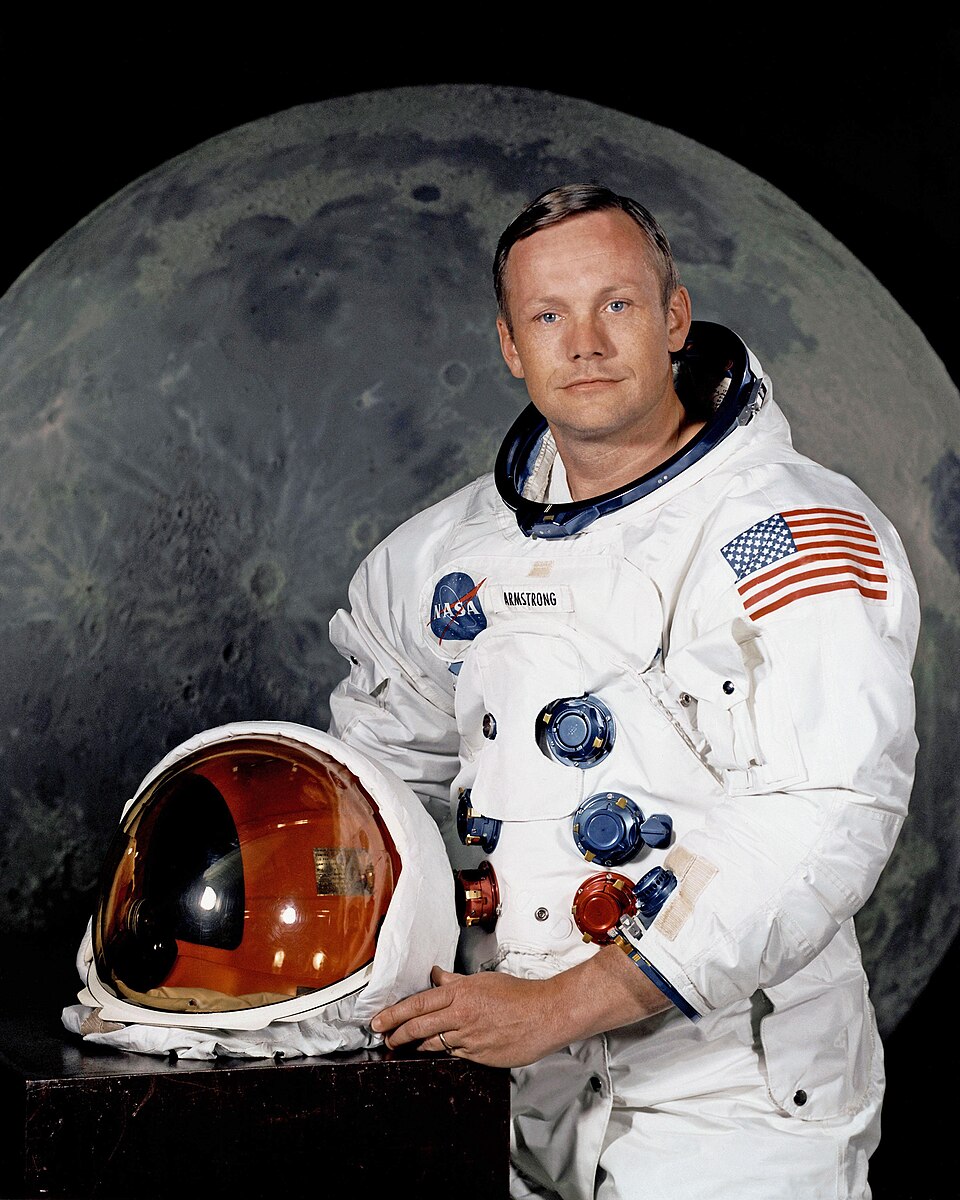
Neil Armstrong was a former test pilot and naval aviator who had already flown on the Gemini 8 mission in 1966. Known for his cool-headedness under pressure, Armstrong manually guided the Eagle to a safe landing when the original landing site turned out to be too rocky. He passed away in 2012, but his legacy endures as the first human to walk on the Moon.
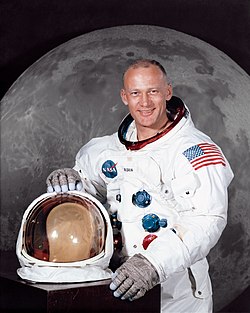
Buzz Aldrin was a decorated Air Force pilot with a doctorate in orbital mechanics from MIT. The second person to walk on the lunar surface, Aldrin described the Moon's landscape as "magnificent desolation." At 96 years old, he remains one of the most prominent advocates for space exploration today.
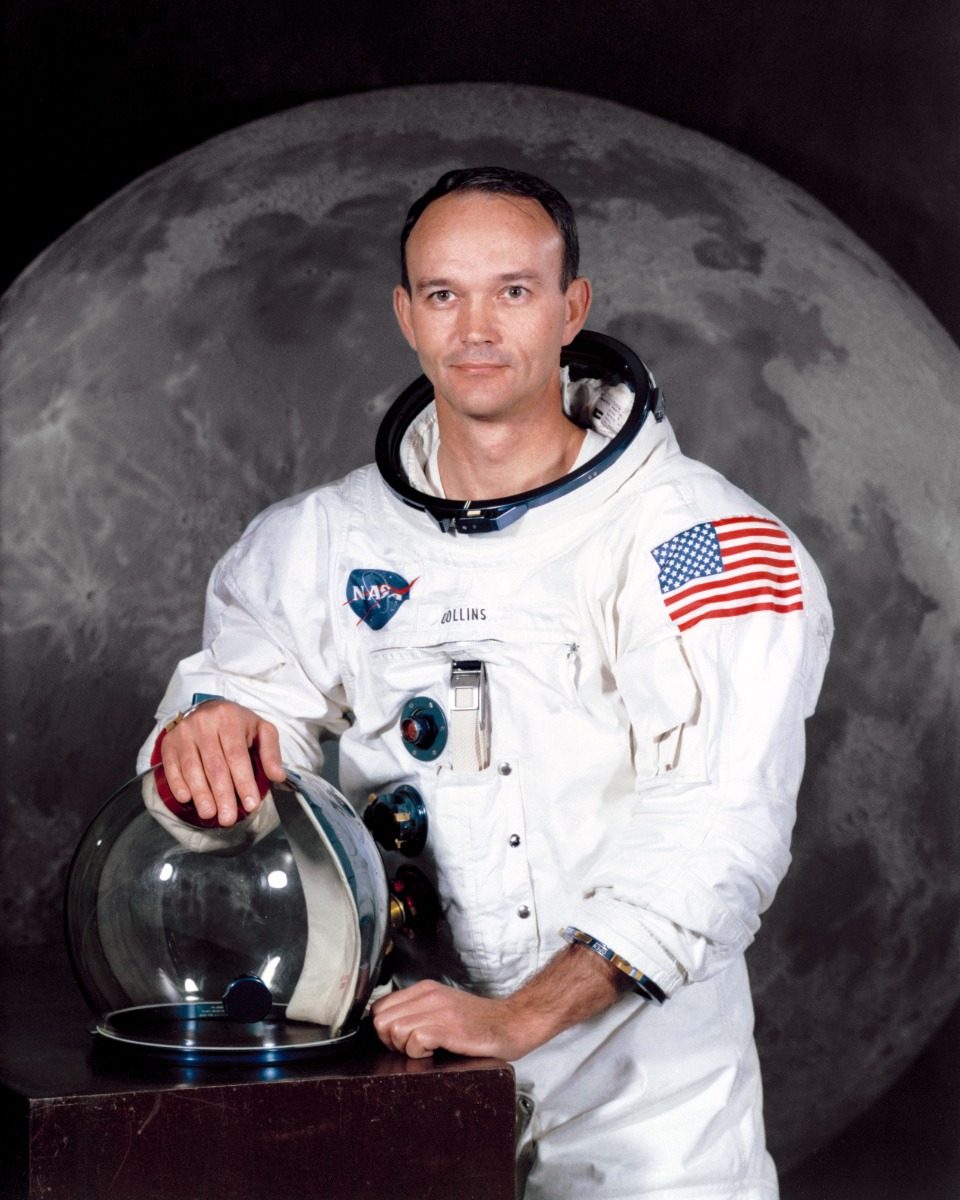
Michael Collins is often called the "forgotten astronaut," but his role was absolutely critical. Piloting Columbia alone in lunar orbit for 21 hours while his crewmates were on the surface, Collins maintained the lifeline home. He later wrote eloquently about the profound experience of being one of the most isolated humans in history. Collins passed away in 2021.
Where Are We Now? The Return to the Moon
As we mark the 57th anniversary of Apollo 11, its spirit is very much alive as space exploration enters a new era. NASA's Artemis program is working toward returning humans to the Moon, this time with a plan to include the first woman and the first person of colour to walk on the lunar surface.
The broader landscape of space exploration has also transformed dramatically. Private companies like SpaceX, Blue Origin, and others are developing next-generation rockets and spacecraft, ushering in a new era of commercial spaceflight. International partnerships through programs like the Lunar Gateway aim to establish a permanent human presence near the Moon, laying the groundwork for eventual crewed missions to Mars.
Lessons for the Future of Space Exploration
The mission teaches us several timeless lessons:
- Big goals inspire innovation.
- Collaboration makes the impossible achievable.
- Exploration drives progress.
The dream that Apollo 11 embodied, that humanity can reach beyond our home planet, is not fading. In fact, its historical moment is now the staple blueprint for future generations of science and space development.
Remembering the First Moon Landing
The Apollo 11 anniversary is more than a celebration of a past event. It’s a reminder of what humanity can accomplish when imagination meets determination.
In 1969, three astronauts travelled nearly 390,000 kilometres to prove that the Moon was within our reach. Today, as we look toward Mars and beyond, that same spirit of discovery continues to guide us.
Fifty-seven years later, the footprints on the Moon remain — untouched, silent, and powerful.
They remind us that no dream is too distant when we dare to take the first step. Happy Anniversary, Apollo 11. Thanks for showing us the way.
5 Fast Facts for Your Next Trivia Night
| Fact | Detail |
| Fuel Power | The Saturn V remains the most powerful rocket ever successfully flown. |
| The "Lonely" Man | While Armstrong and Aldrin walked the Moon, Michael Collins stayed in the Command Module, becoming the most isolated human in history. |
| Quarantine | Upon returning, the astronauts had to stay in a sealed trailer for 21 days to ensure they didn't bring back "Moon germs". |
| Planting the Flag | Buzz Aldrin reported that the flag was actually knocked over by the exhaust of the ascent engine when they took off. |
| Moon Rocks | The crew brought back roughly 21.3 kilograms of lunar material for study. |