



Celestron Origin 678C Camera
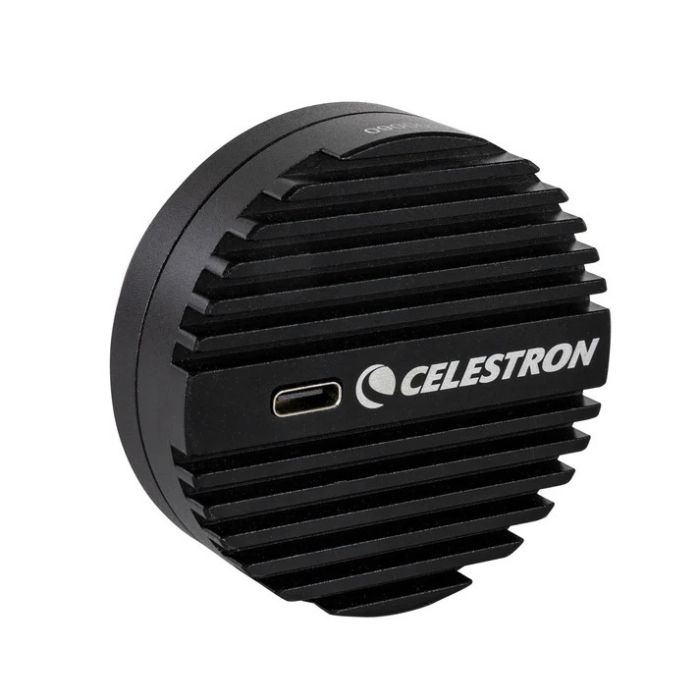
Celestron Origin 678C Camera Upgrade
Upgrade your deep-sky imaging with the Origin 678C, an advanced camera built specifically for the Celestron Origin Intelligent Home Observatory. Featuring Sony STARVIS 2 CMOS technology, this next-generation sensor delivers sharper detail, improved sensitivity, and a wide 16:9 image format that suits smartphone and tablet viewing.
Designed as the successor to the Origin 178C, the 678C is a true image quality step up for astrophotography. Capture galaxies, nebulae, and star clusters with increased clarity and finer object detail, perfect for users who want their targets to better fill the screen and show more structure.
Why Upgrade to the Origin 678C?
Higher Resolution for Finer Deep-Sky Detail
Although the sensor size remains the same, the Sony IMX678 uses smaller 2.0 μm pixels compared to the 2.4 μm pixels of the IMX178. This improves sampling to approximately 1.2 arcseconds per pixel (from 1.5 arcseconds per pixel), allowing you to resolve more detail and achieve a slightly tighter view, especially useful for smaller night-sky targets.
More Megapixels for More Image Data
The IMX678 provides 8.4 MP compared to 6.4 MP on the IMX178, producing higher-resolution image files with increased definition. Because the files are larger, you may notice slightly slower automatic processing in the Origin app depending on the performance of your smartphone or tablet.
Improved Sensitivity with STARVIS 2 Technology
Despite the smaller pixel size, the IMX678 offers a subtle overall sensitivity improvement compared to the IMX178. This helps reveal faint structure with excellent signal quality, though brightness differences will not appear dramatic between sensors.
Different ISO Response
ISO values are not directly comparable between the two sensors due to different gain behaviour. The IMX678 uses a default ISO of 1000, while the IMX178 uses a default ISO of 200.
Widescreen 16:9 Aspect Ratio
The IMX678 captures in a 16:9 aspect ratio rather than the 3:2 format used by the IMX178. This creates a wider, more rectangular field of view that is ideal for framing larger regions of the night sky and perfectly suited to landscape orientation on most phones and tablets, making composition, viewing, and sharing easier.
Quick and Simple Installation
Installing the Origin 678C is fast and straightforward. Remove the existing camera, attach the Origin 678C using the included adapter and retaining ring, and plug it in, no complicated tools or processes required.
After installation, the Origin app guides you through capturing fresh calibration frames:
Dark Frames – Reduce sensor noise for cleaner images
Flat Frames – Correct illumination and vignetting across the frame
For consistent flat-field results, we recommend the PrimaLuceLab GIOTTO for Celestron Origin—a flat-field generator designed for Origin that works with the same smartphone you use to control your system. You can also capture “sky flats” at dusk. Either method ensures your upgraded system is optimised and ready for high-contrast imaging on your next session.
Give Your Origin 178C a New Role
Upgrading to the Origin 678C doesn’t mean your original Origin 178C needs to be retired. With a standard M42 T-thread connection, it can be used on other telescopes you may own and makes an excellent lunar or planetary imaging camera. In minutes, your 178C can be repurposed for a new role in your astrophotography kit.
Ideal For
Deep-sky astrophotography (galaxies, nebulae, star clusters), Celestron Origin camera upgrades, Sony STARVIS 2 CMOS performance, higher-resolution smart telescope imaging, and wide 16:9 framing for smartphone and tablet displays.
| Manufacturer | Celestron |
|---|
